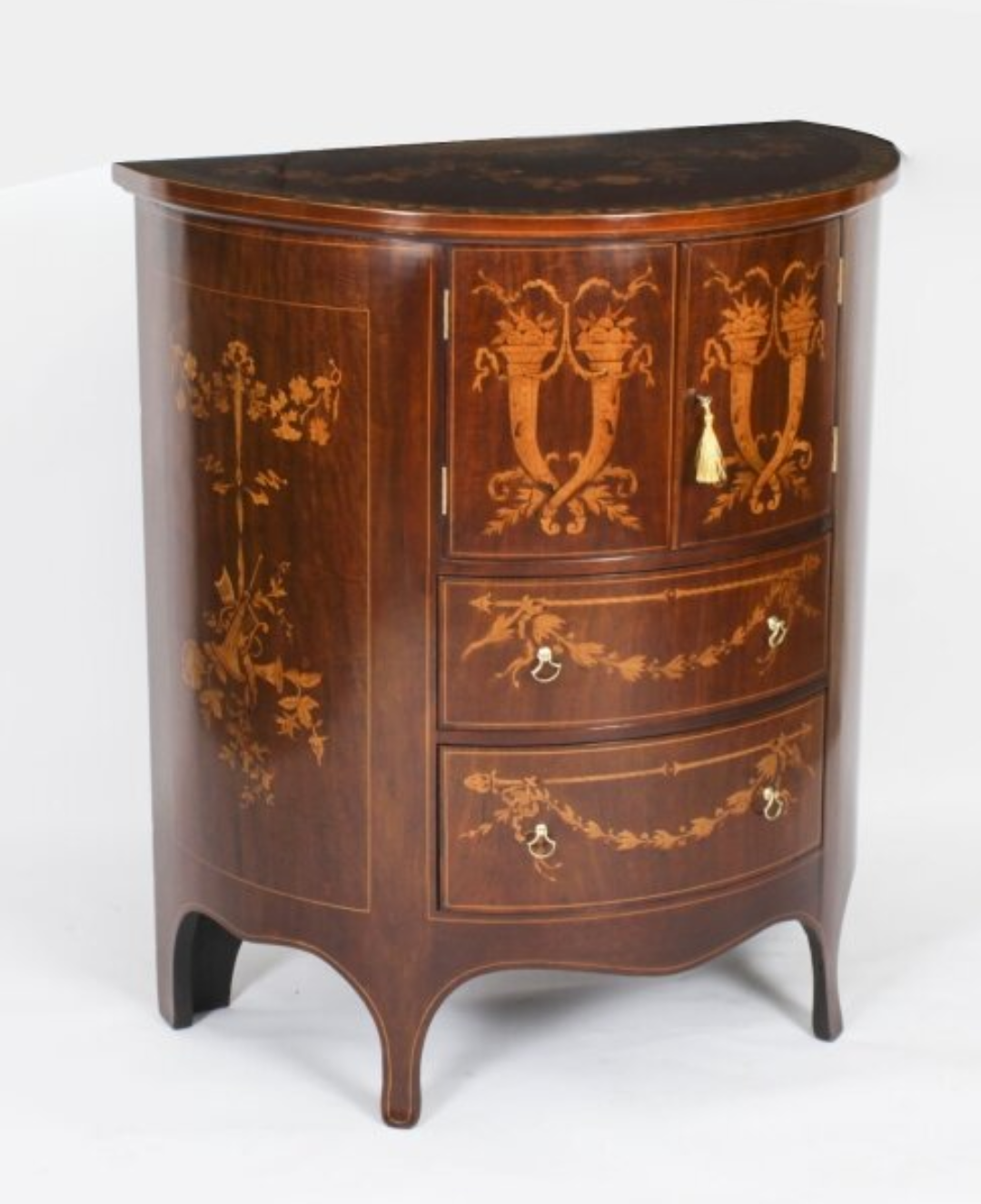
"Is it real wood?"
This question makes us crazy because we don't quite know how to answer it without a history lesson! 😵💫🤦
So, let’s talk about “real wood”… because this one gets misunderstood a lot. 👇
Somewhere along the way, “real wood” started meaning only solid wood—no veneer, no exceptions. But here’s the truth:
Dating back to ancient Egypt… some of the most beautiful, high-end furniture was made using wood veneer.
Yep. The same antiques people treasure today? Many of them were crafted with a solid wood base and a thin layer of high-quality wood veneer on top.
Why? Because it allowed craftsmen to: ✨ Use rare and expensive woods more efficiently
✨ Create stunning grain patterns and designs
✨ Build furniture that was actually more stable over time
Veneer wasn’t a shortcut—it was a skillful technique.
And honestly… it still is.
Here’s a quick timeline to give you context:
🏺 Ancient Egypt (around 3000 BCE)
The earliest known use of wood veneer dates back to ancient Egypt. Craftsmen would slice thin layers of rare woods (like ebony) and apply them over more common wood.
👉 This was one of the first examples of both veneering and decorative inlay (marquetry).
🏛️ Ancient Rome (around 1st century BCE – 3rd century CE)
The Romans took veneer to another level. Wealthy households prized exotic woods like citrus wood and used veneers to show off dramatic grain patterns.
👉 Veneer became a luxury status symbol.
🏰 17th–18th Century Europe
By this time, veneer was a hallmark of fine furniture making.
👉 Intricate designs, bookmatching, and detailed patterns became popular—especially in French and English furniture.
🪑 1800s and beyond
This is where you might be most familiar. Veneer was widely used—not because it was “cheap,” but because it allowed:
Better stability (less warping than solid wood)
More intricate designs
Use of high-end woods in a practical way
🤎🤎🤎
“Real wood” doesn’t have to mean one single thing. Solid wood, veneer, hardwood, softwood—they all have a place, and when done well, they all create beautiful, lasting pieces.
So next time you hear “is it real wood?”… remember: Some of the most timeless furniture in history was made with veneer! 🤍